
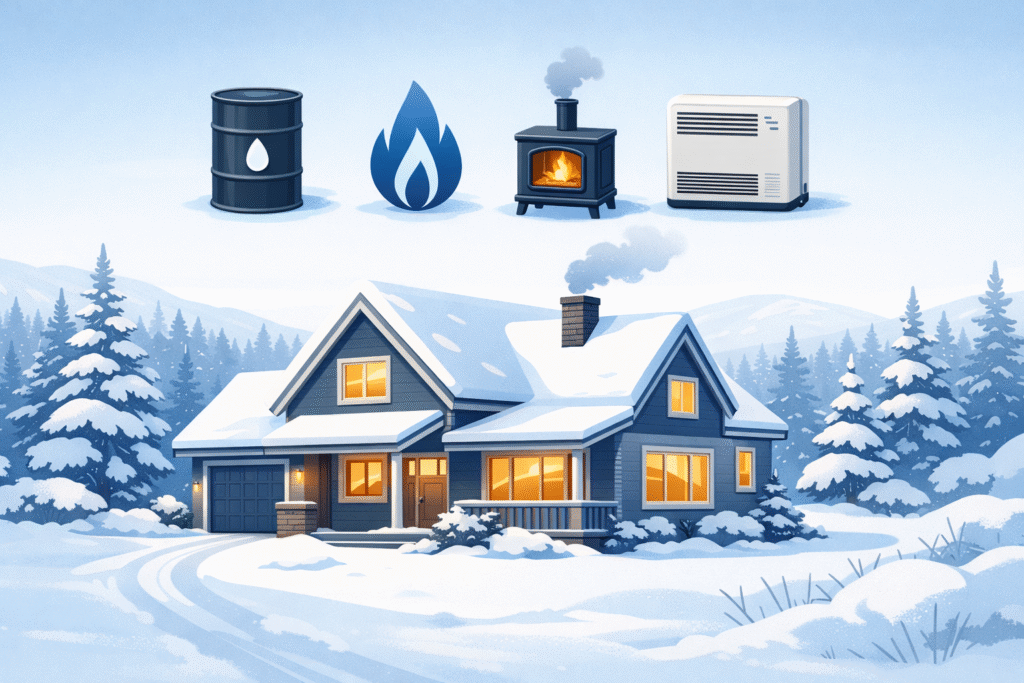
 If you are house hunting in Interior Alaska, understanding Fairbanks Utility Costs Explained could save you thousands of dollars. In fact, Fairbanks Utility Costs Explained is a conversation I have with nearly every buyer I work with. Heating a home in Fairbanks is not like heating a home in the Lower 48. Winter temperatures can sit well below zero for weeks at a time, and the way a home is heated directly impacts your monthly expenses.
Let’s break down why some homes have shockingly high bills and how you can avoid stepping into a money pit.
Oil Heat
Heating oil is still very common in Fairbanks. Many older homes rely on oil-fired boilers that provide both heat and domestic hot water. The biggest factor here is efficiency. Older boilers can burn a lot more fuel than modern high-efficiency systems.
Oil prices fluctuate, so budgeting can feel unpredictable. A poorly insulated home with an aging oil boiler can easily cost hundreds more per month in deep winter. Buyers should ask for:
-
Average gallons used per year
-
Age and service history of the boiler
-
Size and condition of the oil tank
-
Copies of utility cost history for at least 12 months
If a home has oil heat, insulation and air sealing become even more important.
Natural Gas
Natural gas is often more affordable and consistent compared to oil, but not every area in Fairbanks has access to gas lines. Homes connected to natural gas typically see lower heating costs, especially if they have high-efficiency furnaces or boilers.
When buying a gas-heated home, ask:
-
Is the system high efficiency
-
What is the AFUE rating
-
Are there recent maintenance records
-
What were last year’s total gas costs
Gas can be a strong selling point, but efficiency still matters.
Wood Heat
Wood stoves are popular in Interior Alaska. Many homeowners appreciate the independence and cost savings, especially if they have access to affordable firewood. However, wood heat requires work. Cutting, hauling, stacking, and feeding the stove is part of the lifestyle.
Some homes rely solely on wood. Others use it as supplemental heat to reduce oil or gas consumption. Buyers should check:
-
Is the stove EPA certified
-
When was the chimney last inspected
-
Is wood the primary or backup heat source
-
How much wood does the seller burn annually
Insurance requirements may also come into play with wood systems.
Toyo Stoves
Toyo stoves are direct vent oil heaters commonly found in dry cabins, smaller homes, or as supplemental heat sources. They are efficient for their size but are typically best for smaller square footage. If you see a Toyo stove as the only heat source in a larger home, that is a red flag.
Ask about:
-
Square footage the Toyo is rated to heat
-
Annual fuel usage
-
Whether there is backup heat
Insulation and Energy Rating Matter
Regardless of fuel type, insulation is the hidden hero. In Fairbanks, a well-insulated home with triple-pane windows can dramatically reduce heating costs. Always review the home’s energy rating, foundation type, attic insulation levels, and air sealing improvements.
Before closing, request full utility history. Not just winter months, but the entire year. Numbers do not lie.
At The Real Estate Collective, I walk buyers through these conversations every day. My goal is to make sure you understand not just the purchase price, but the true cost of ownership in Interior Alaska. If you are thinking about buying, Contact me here: https://nicwilliamsrealtor.com/contact-form/ and let’s talk strategy. You can also Follow on Facebook: https://www.facebook.com/NicWilliamsAlaskaRealtor for local updates and Watch on YouTube: https://www.youtube.com/@TheAlaskanRealtor for deeper dives into Alaska real estate life.
Heating in Fairbanks is serious business. But with the right questions and the right guidance, you can stay warm without burning through your budget.