
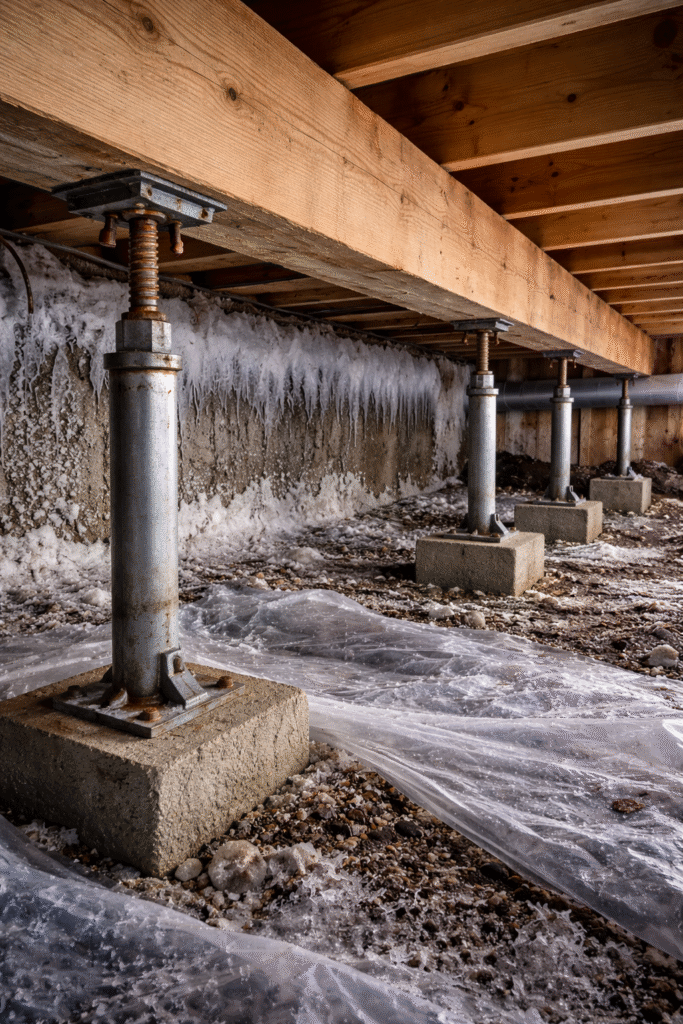
 How Alaska’s Extreme Cold Impacts Foundations is a question every Fairbanks and North Pole homeowner should understand. How Alaska’s Extreme Cold Impacts Foundations goes far beyond frozen pipes and high heating bills. Beneath your home, the ground itself is reacting to months of deep freeze, and that movement directly affects how houses are built, maintained, and evaluated in Interior Alaska.
If you are buying or selling in Fairbanks or North Pole, here is what you need to know about permafrost, floating slabs, adjustable jacks, and crawlspaces.
Permafrost: The Ground That Stays Frozen
In parts of Interior Alaska, the soil below the surface remains frozen year round. This is called permafrost. When it stays frozen and stable, it can support a structure. The problem begins when it thaws unevenly.
Heat from a home can warm the soil beneath it. Changes in drainage or vegetation can also affect ground temperature. When permafrost thaws, the ground can settle, sometimes dramatically.
That is why foundation design in Fairbanks is different from many parts of the Lower 48. Builders must account for soil conditions, insulation, ventilation, and drainage to prevent thaw settlement.
For buyers, it is important to ask:
-
Is the property in a known permafrost area?
-
Has there been past settling or foundation repair?
-
How is water directed away from the home?
Understanding the soil story is just as important as understanding the house itself.
Floating Slabs: Built to Move
One common foundation type in Fairbanks and North Pole is the floating slab. Unlike a traditional deep footing foundation, a floating slab is designed to sit on prepared ground and move slightly as the soil shifts.
This flexibility is intentional. In extreme cold climates, rigid foundations can crack if the ground heaves or settles. A properly built floating slab spreads the load and reduces stress points.
However, not all slabs are equal. Buyers should look for:
-
Visible cracks wider than a hairline
-
Uneven floors
-
Doors that stick or do not latch properly
Some minor cracking is common. Significant separation or noticeable sloping may require further evaluation. During inspections, professionals often use levels to measure floor variation.
Adjustable Jacks in Crawlspaces
Many homes in Fairbanks and North Pole have crawlspaces rather than full basements. Inside these crawlspaces, you will often see adjustable steel jacks supporting beams.
These jacks are not necessarily a red flag. In fact, they are often part of the design. Because soils shift with freeze and thaw cycles, adjustable supports allow homeowners to re level floors over time.
What matters is condition and installation.
Buyers should look for:
-
Properly seated jacks on stable pads
-
No excessive rust or corrosion
-
Beams that appear straight and well supported
-
Signs of past water intrusion
If a crawlspace smells strongly of moisture or shows standing water, that can signal drainage problems. In Interior Alaska, managing moisture is just as important as managing cold.
What to Look for in Crawlspaces
When touring homes, especially in winter, do not skip the crawlspace if access is available. It tells you a lot about how the home handles extreme conditions.
Look for:
-
Adequate insulation on walls and floors
-
Proper vapor barriers on the ground
-
No sagging insulation
-
Clear signs of ventilation or controlled airflow
-
Evidence of rodent prevention
In Fairbanks and North Pole, crawlspaces take a beating from temperature swings. A well maintained crawlspace suggests attentive ownership.
Why This Matters for Buyers and Sellers
Alaska’s extreme cold is not going away. Homes here are built with that reality in mind. A house with a floating slab, adjustable jacks, or a history of minor settling is not automatically a problem. It may simply reflect smart building practices for our climate.
For sellers, addressing foundation questions upfront builds buyer confidence. Providing inspection reports, repair receipts, or engineering evaluations can make a big difference.
For buyers, working with a local real estate professional who understands Interior soil conditions is critical. What looks alarming to someone from out of state may be typical for Fairbanks.
As Owner Broker of The Real Estate Collective, I help clients interpret what is normal, what needs attention, and how to negotiate repairs when necessary. Alaska foundations require local knowledge, and having the right guidance protects your investment.
If you are buying or selling in Fairbanks or North Pole and want to better understand how Alaska’s extreme cold impacts foundations, let’s connect.
Reach out here:
https://nicwilliamsrealtor.com/contact-form/
Follow along on Facebook:
https://www.facebook.com/NicWilliamsAlaskaRealtor
Subscribe on YouTube:
https://www.youtube.com/@TheAlaskanRealtor