
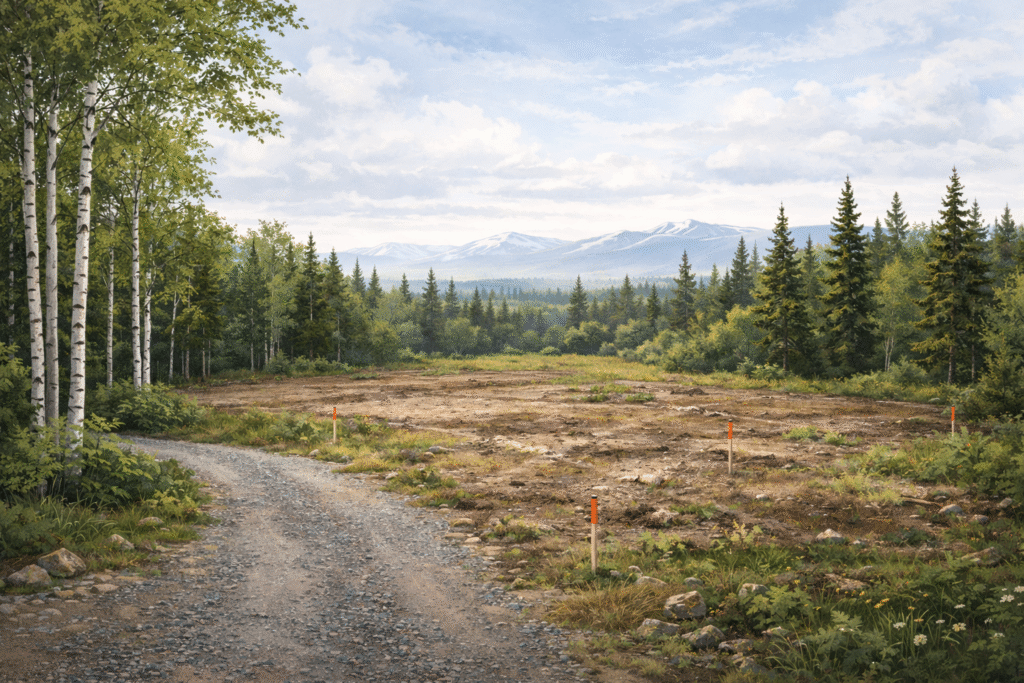
 Owning Land in Alaska Truth is a conversation I have almost weekly. Owning Land in Alaska Truth becomes especially important when buyers see a five acre parcel listed at a price that seems too good to pass up. Alaska has space, freedom, and opportunity, but land here comes with layers that are not always obvious at first glance.
As the owner broker of The Real Estate Collective, I love helping people pursue the Alaska dream. I also believe in giving you the full picture before you invest your hard earned money.
Let’s talk about what really matters.
Access Is Everything
The first question I ask when someone is considering owning land in Alaska is simple. How do you get to it?
In areas around Wasilla, Palmer, or even outside Fairbanks, parcels can look great on a map but have no legal road access. A trail or two track does not automatically mean you have a recorded, insurable easement.
Without legal access, financing becomes difficult. Future resale becomes harder. Even getting utilities to the property can become complicated and expensive.
Year round access also matters. Some roads are not borough maintained. Snow removal may fall entirely on property owners. If you are planning to build or live there full time, that is a critical detail.
Easements and Shared Driveways
Easements are common in Alaska, especially for flag lots or subdivided land. Some are straightforward. Others are vague or poorly documented.
You need to understand who maintains the driveway, who has the right to widen it, and whether utilities run through it. A shared access agreement that works well with one neighbor may not work as smoothly with the next.
Before closing, always review the title report carefully. If something feels unclear, ask questions. Owning land in Alaska often means doing more homework up front.
Wetlands and Buildable Area
Alaska has a lot of water. That includes wetlands. Just because you own five acres does not mean you can build on five acres.
Portions of land may be classified as wetlands, which can limit or restrict development. In some cases, you may need environmental review or permits before disturbing certain areas.
A parcel that looks inexpensive may actually have only a small buildable footprint once setbacks, wetlands, and topography are considered.
Permafrost and Soil Conditions
In parts of the Interior and even select pockets of Southcentral, permafrost can dramatically affect building plans. Areas near Fairbanks are especially known for soil conditions that shift with freeze and thaw cycles.
Building on permafrost requires specialized foundations. That adds cost. Even without permafrost, muskeg and poor drainage can require engineered fill or pilings.
A geotechnical evaluation may sound excessive, but on certain parcels it can save you from major structural issues down the road.
Utilities and True Development Costs
Raw land often means no well, no septic, and no power. Drilling a well in Alaska can cost far more than buyers expect. Septic systems must meet borough requirements. Bringing power from the nearest line may involve significant trenching.
That inexpensive parcel can quickly grow in price once you factor in clearing, driveway installation, well drilling, septic installation, and foundation work.
Cheap land is not always cheap.
Thinking Long Term
Owning land in Alaska can absolutely be a smart move. It offers privacy, flexibility, and the ability to build something that fits your lifestyle. The key is aligning your vision with the realities of the property.
If you are considering buying land, I would love to walk the property with you and talk through these factors in detail. Contact me here: https://nicwilliamsrealtor.com/contact-form/ and we can look at your goals together.
For more Alaska real estate insights, Follow on Facebook: https://www.facebook.com/NicWilliamsAlaskaRealtor and Watch on YouTube: https://www.youtube.com/@TheAlaskanRealtor where I share practical advice about buying, selling, and living here.
The dream of owning land in Alaska is real and attainable. Just make sure you understand access, easements, wetlands, permafrost, and development costs before you sign. When you approach it wisely, land can be one of the most rewarding investments you ever make.